Transport demand
Relations between time-varying demand and service organization.
Transport organization and coordinated operation
Service frequency, station calls, departures, and section running times are coordinated with headway and line-capacity checks.
Back to research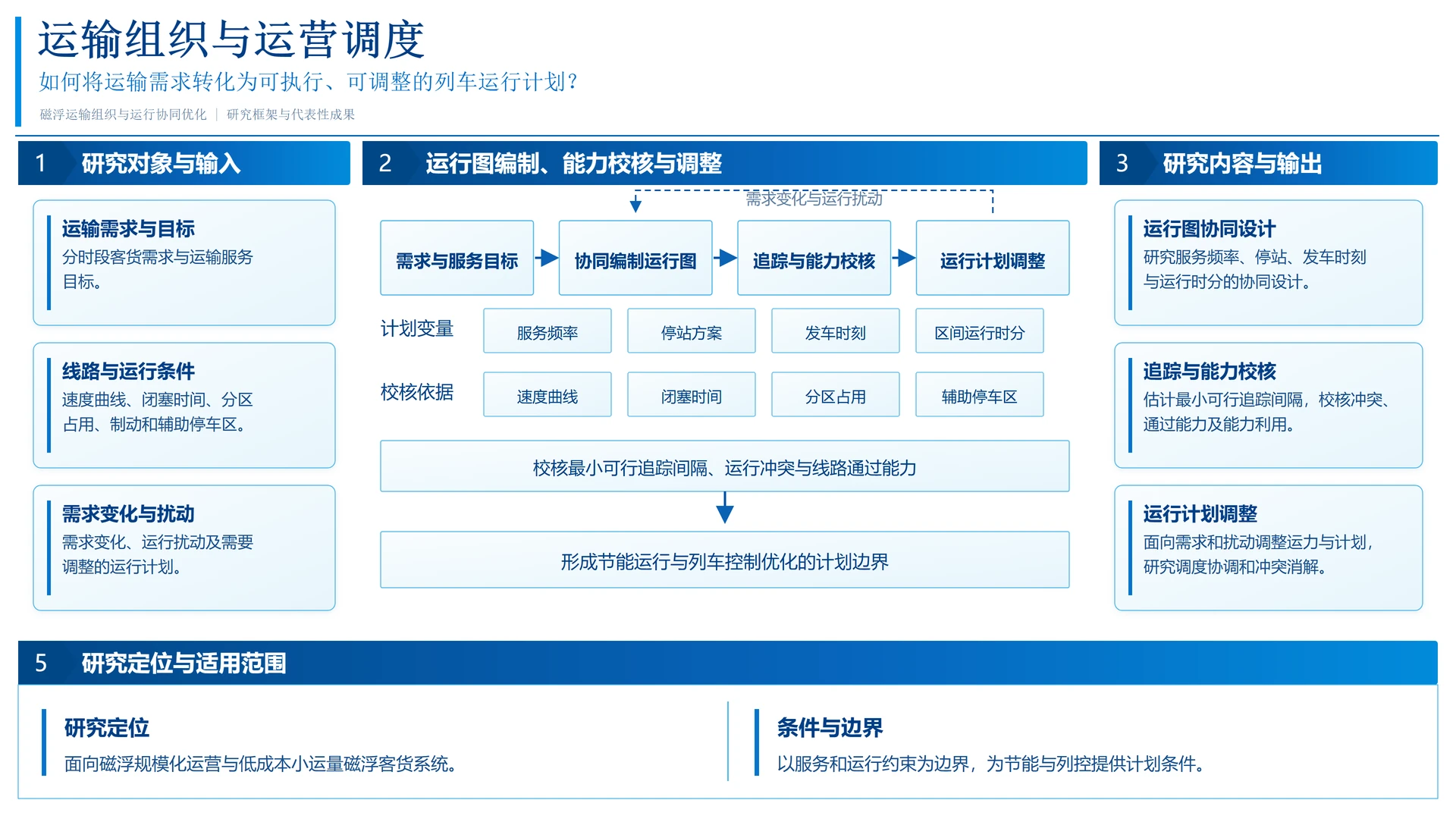
01 / OVERVIEW
Timetables respond to time-varying demand; blocking time, section occupancy, and speed profiles determine minimum headway, while plans adapt to demand changes and disruptions.
KEY QUESTIONS
02 / RESEARCH CONTENT
Relations between time-varying demand and service organization.
Frequency, calls, departure times, and section running times.
Headway from blocking time and section occupancy.
Plan adjustment for demand changes and operating disruption.
03 / RELATED OUTPUTS
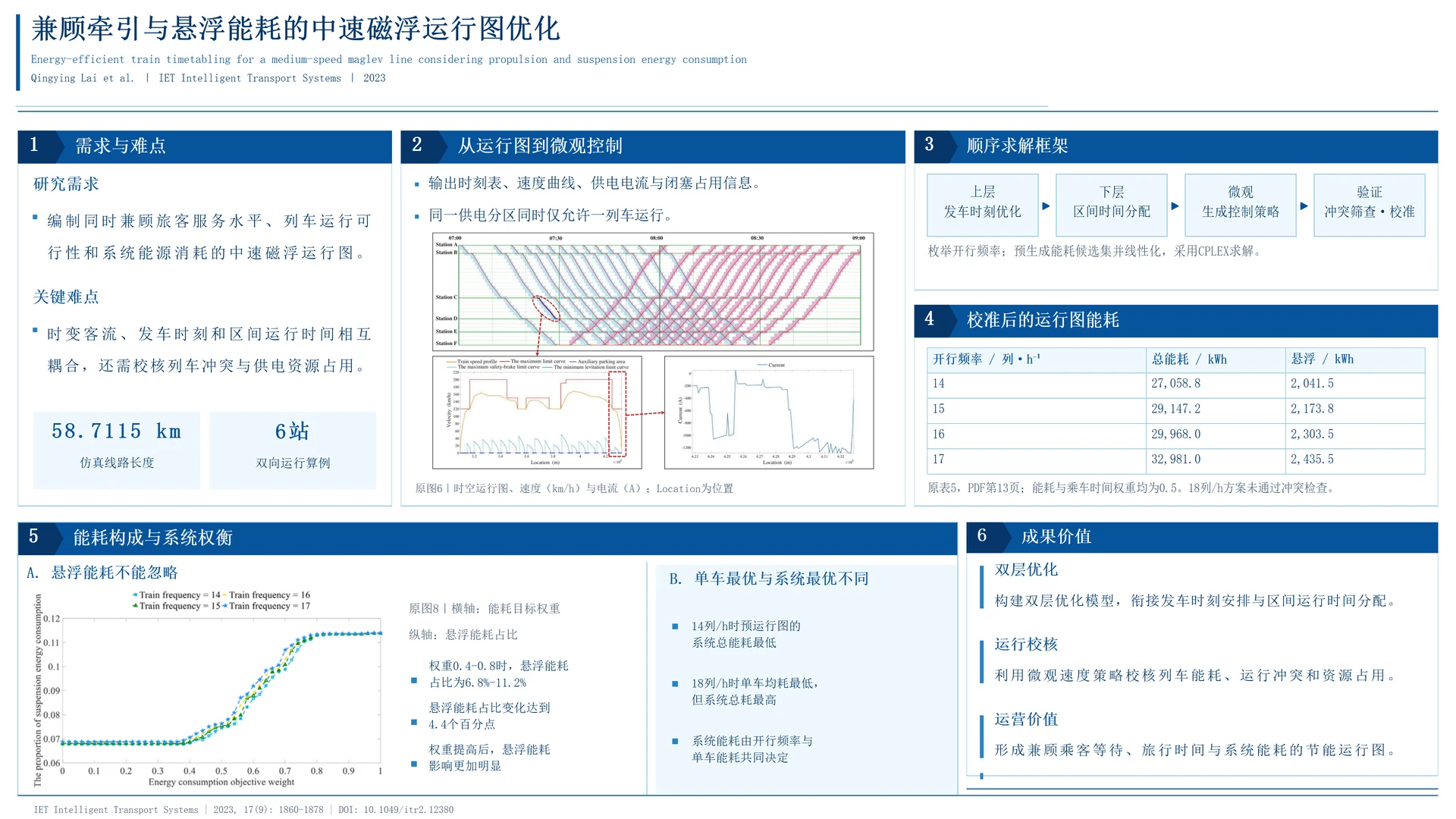
Paper / 2023
A bilevel model coordinates departures, section running times, and demand while considering propulsion and levitation energy.
View output ↗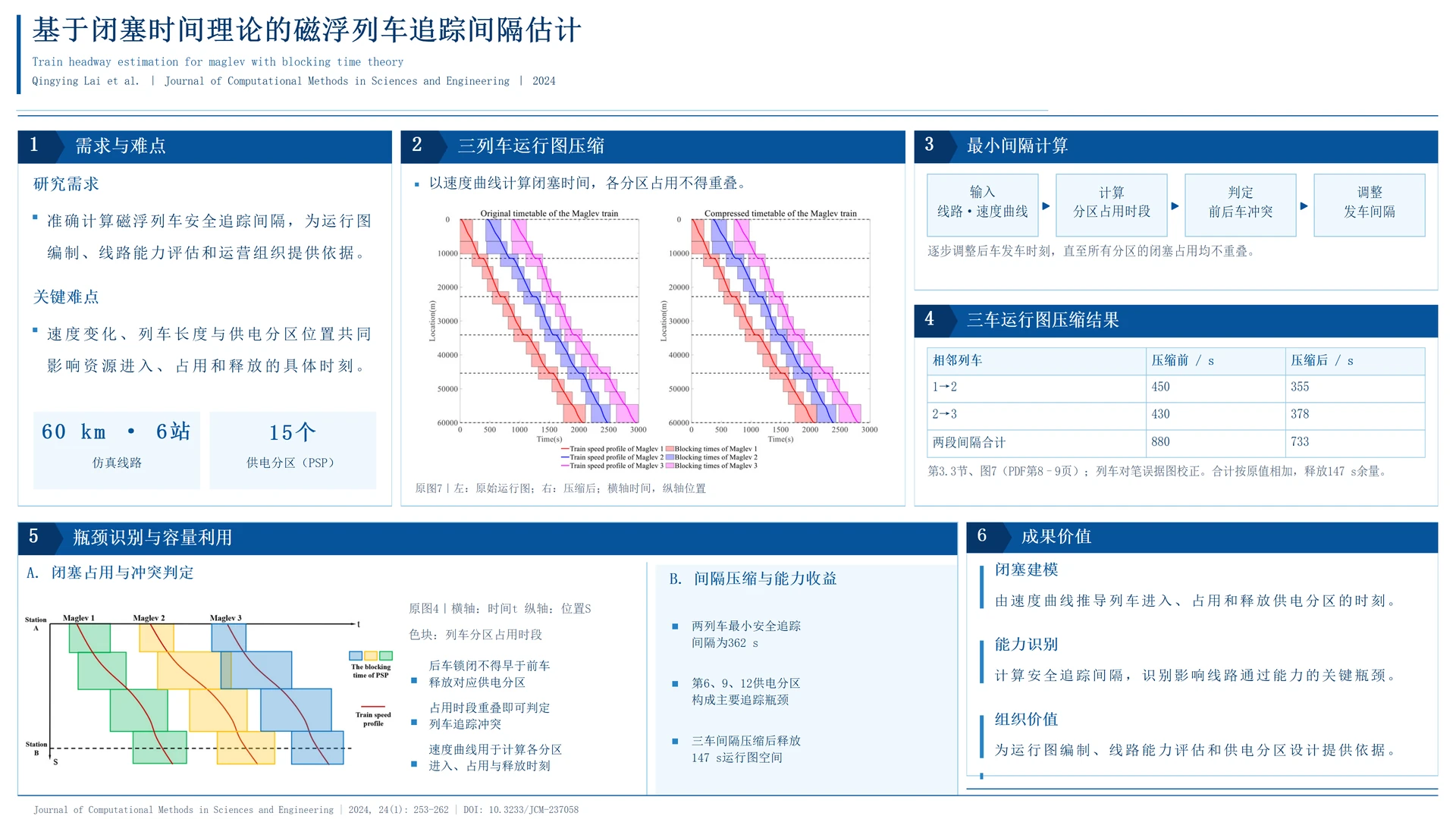
Paper / 2024
Blocking time theory models control-section occupation and release to support safe headway and line-capacity assessment.
View output ↗Invention patent / 2021
A genetic-algorithm method for energy-efficient medium-speed maglev timetables.
View output ↗Software copyright / 2020
A prototype system for validating medium-speed maglev transport organization plans.
View output ↗“Demand, departure times, and section running times are the core variables of maglev operations.”