Speed profiles
Energy-efficient profiles under line and operating constraints.
Transport organization and coordinated operation
Traction, cruising, coasting, and braking are optimized under line and running-time constraints for safe, punctual, and energy-efficient operation.
Back to research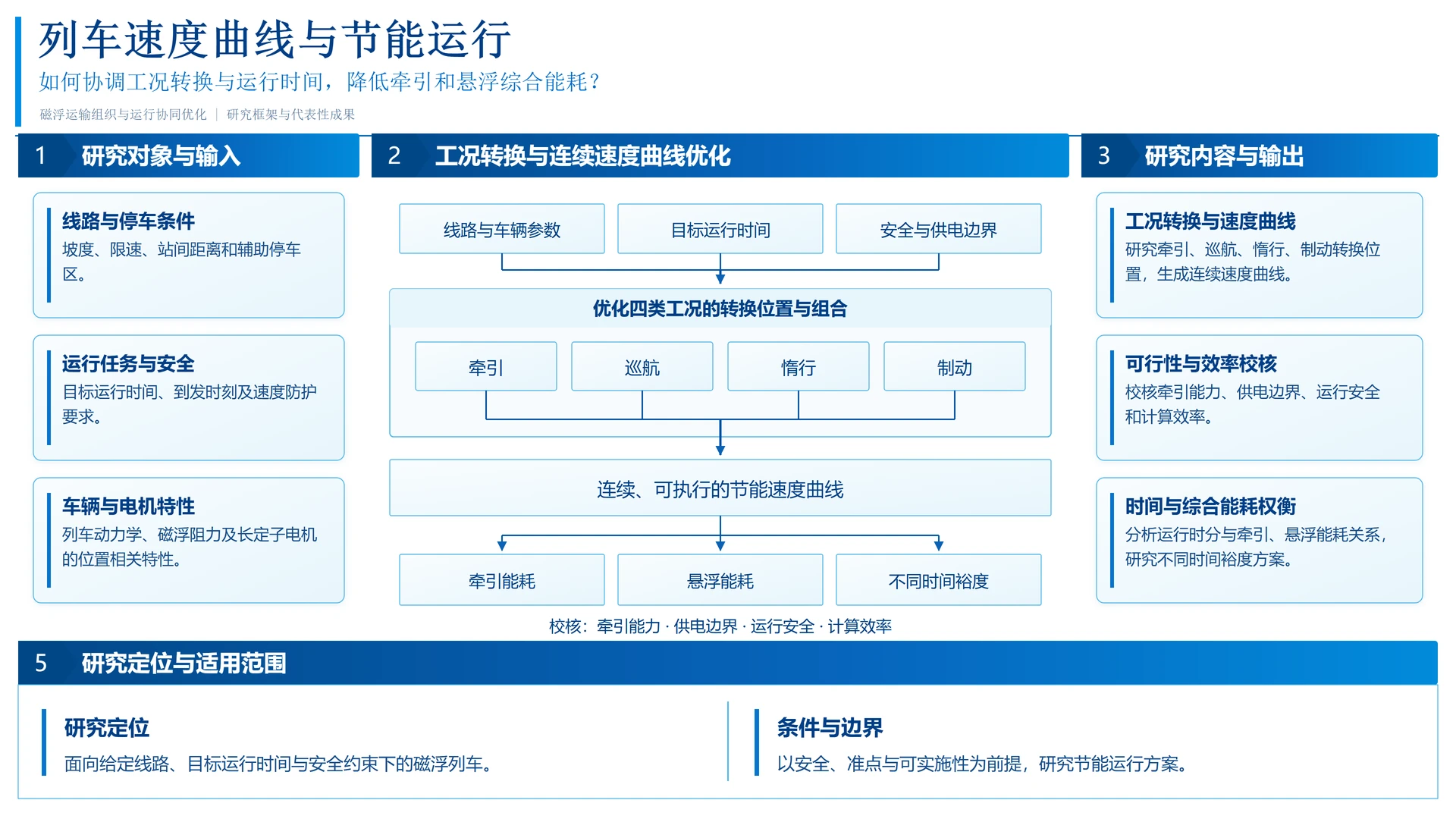
01 / OVERVIEW
Line conditions, speed protection, auxiliary stopping areas, propulsion and levitation energy, traction capability, power boundaries, and safety are considered together.
KEY QUESTIONS
02 / RESEARCH CONTENT
Energy-efficient profiles under line and operating constraints.
Feasible trajectories incorporating auxiliary stopping areas.
Propulsion and levitation energy in one optimization framework.
Motor characteristics, power capacity, and speed protection.
03 / RELATED OUTPUTS
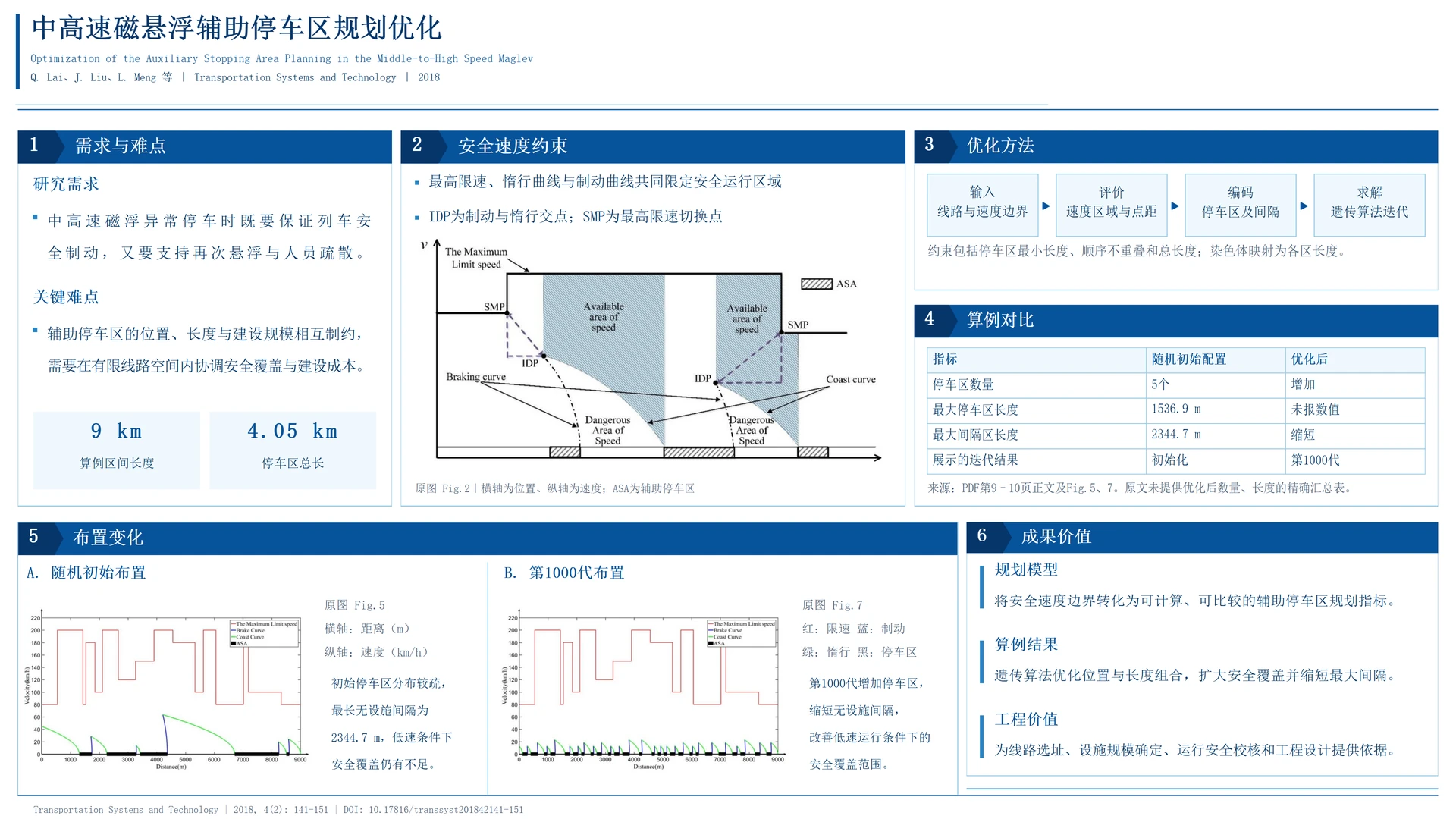
Paper / 2018
An optimization model supports stopping-area location, scale, and safe train operation design.
View output ↗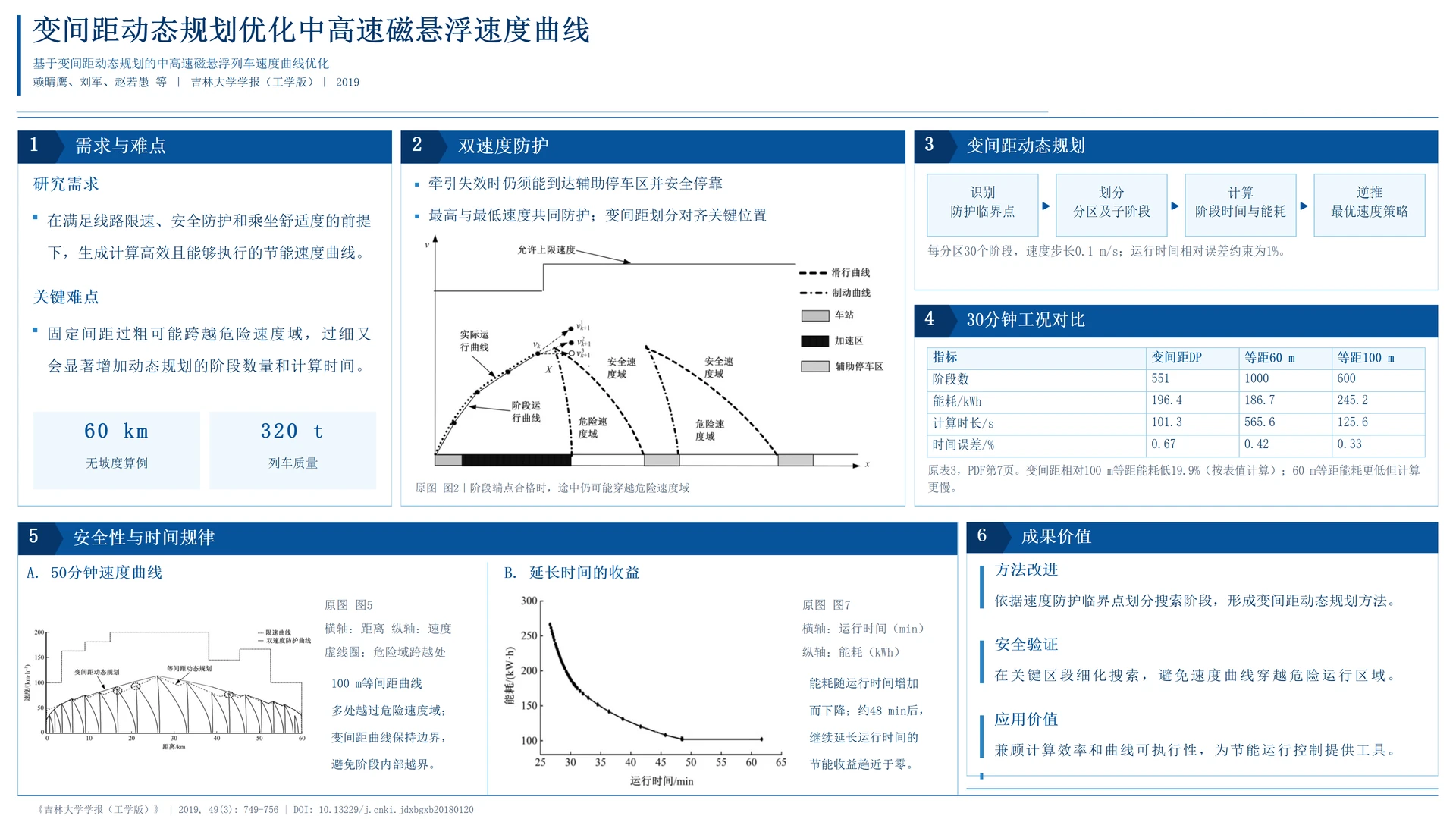
Paper / 2019
Variable-step dynamic programming balances calculation accuracy and efficiency for energy-efficient speed profiles.
View output ↗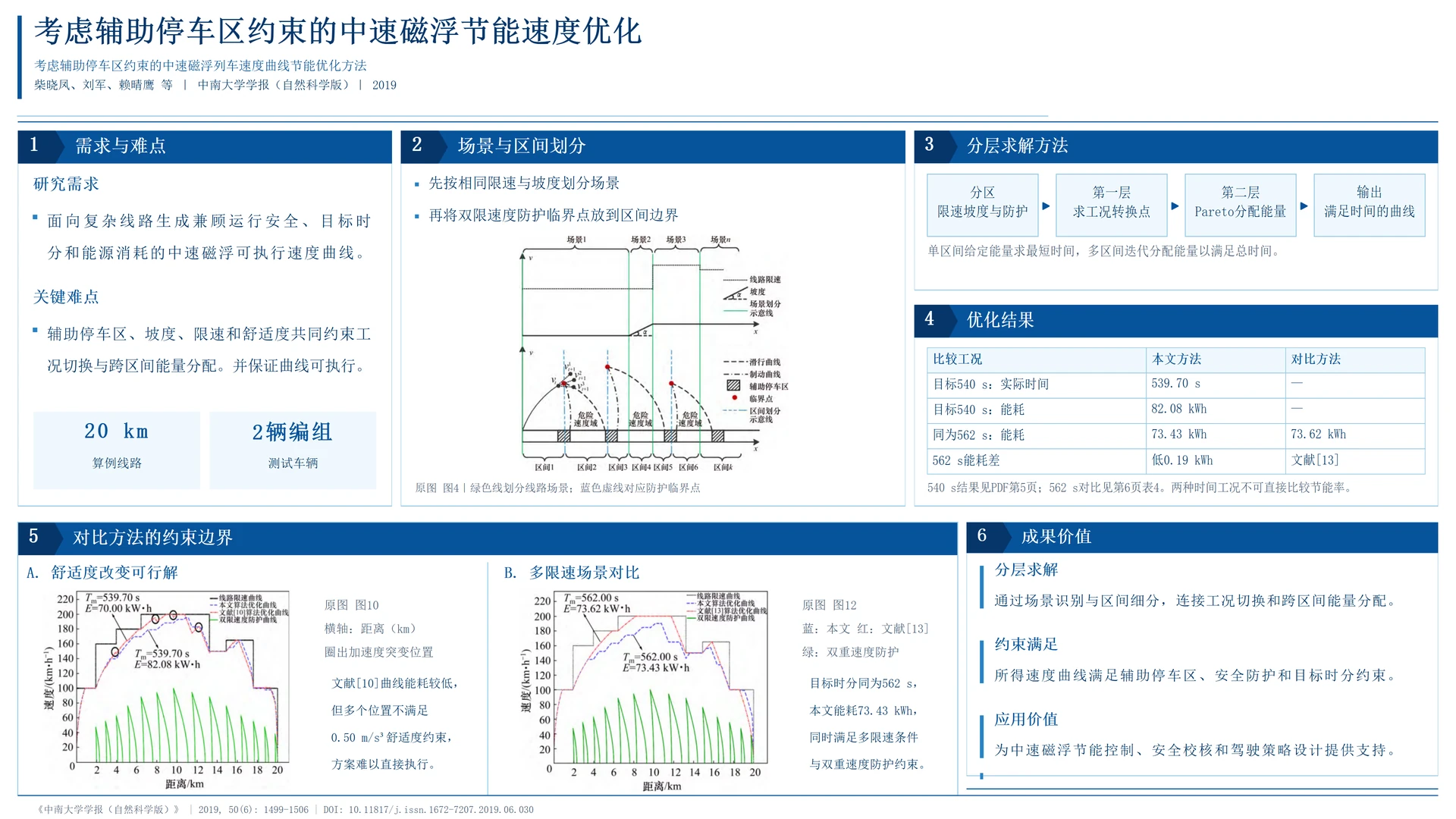
Paper / 2019
Auxiliary stopping conditions enter multi-objective optimization for safe, punctual, and energy-efficient operation.
View output ↗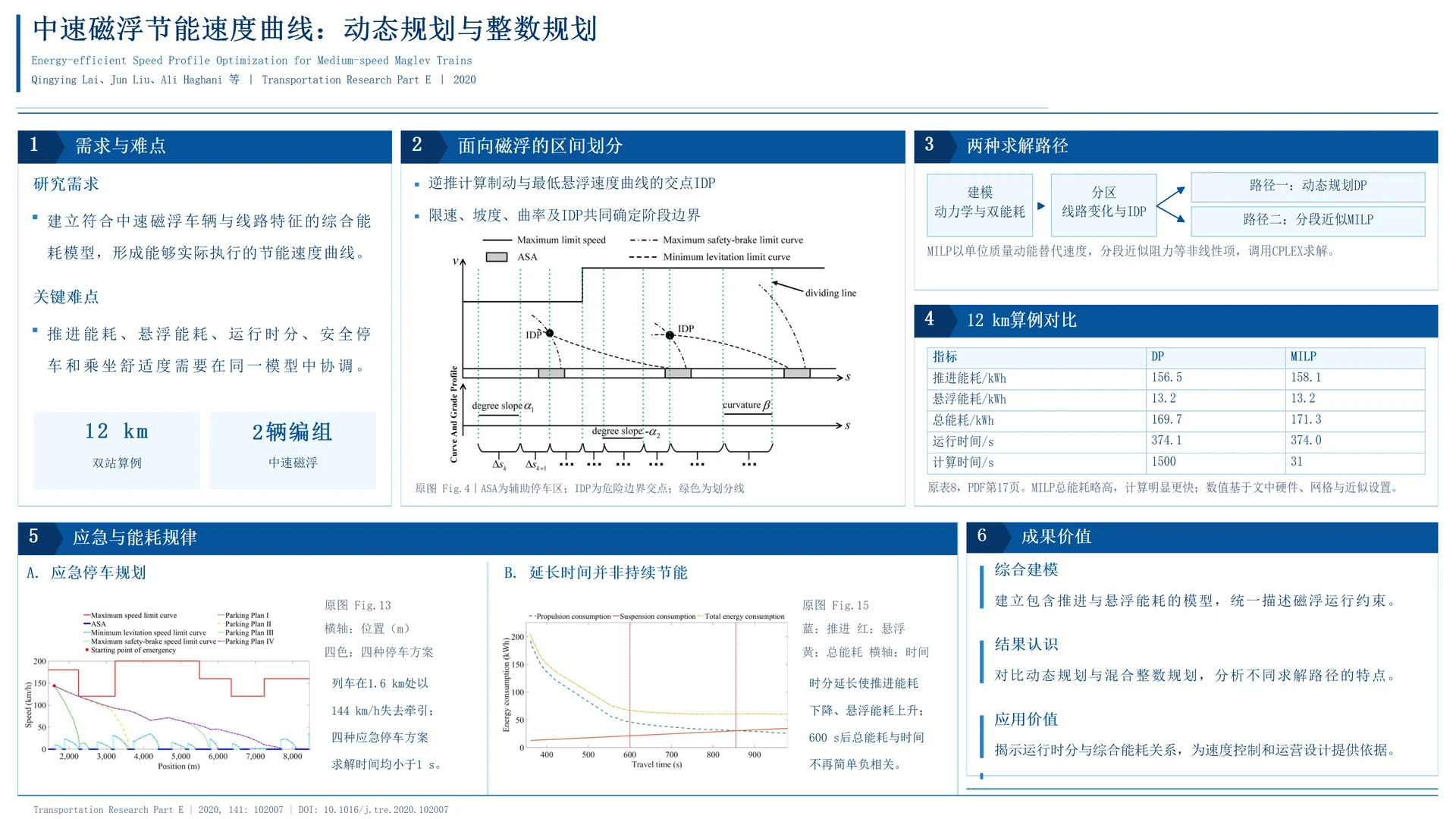
Paper / 2020
Propulsion and levitation energy, auxiliary stopping, and operating constraints are combined in safe, time-feasible speed profiles.
View output ↗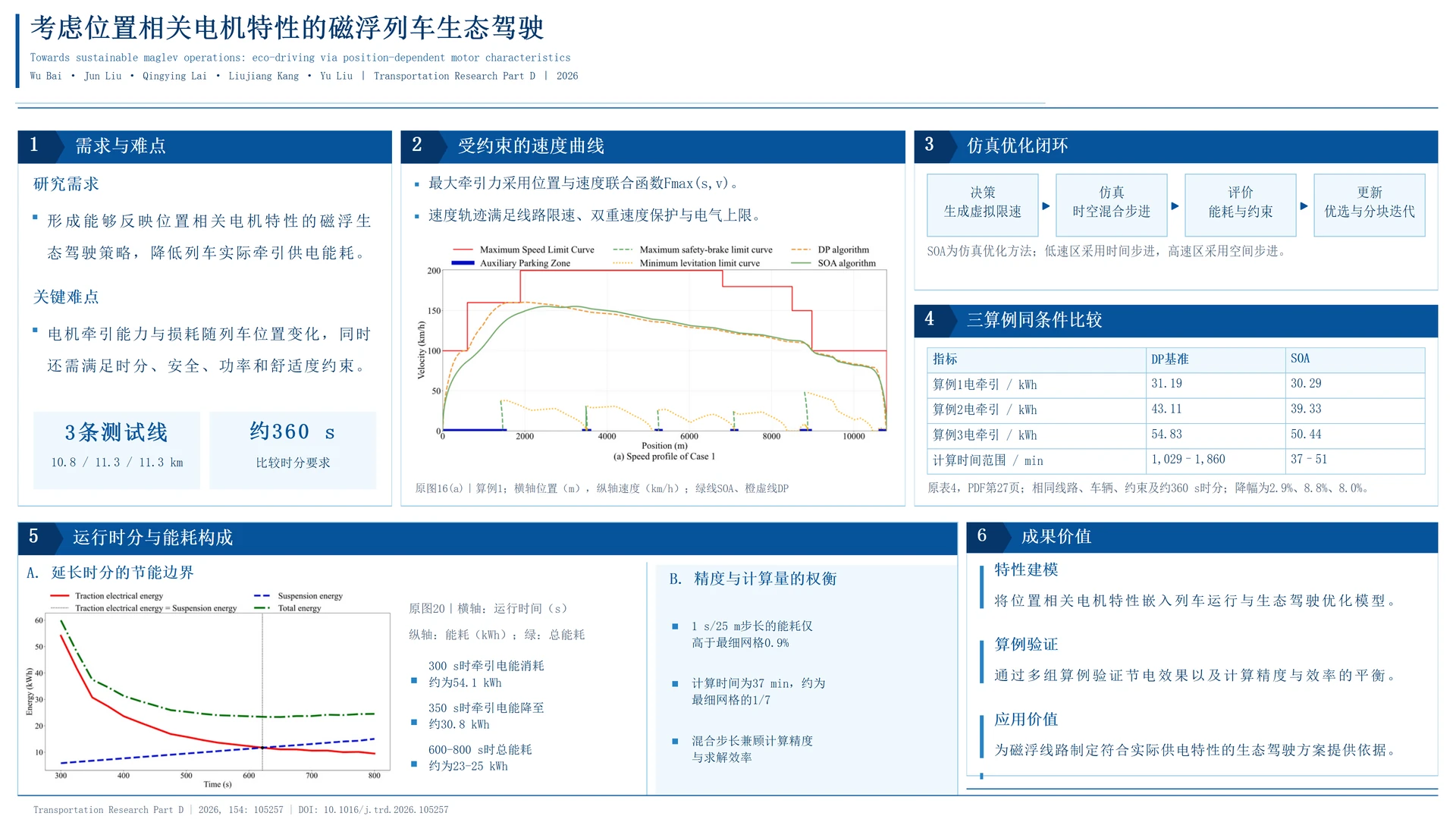
Paper / 2026
A time-space coupled model produces energy-efficient driving curves under safety and power constraints.
View output ↗“Running time, energy, and safety boundaries jointly define feasible energy-efficient maglev operation.”